
- Sodium Surprise: Did you know a single serving of rotisserie chicken can pack as much sodium as a small bag of chips? That’s nearly 20% of your daily recommended intake in just one or two slices of breast meat.
- Flavor Chemistry: Often, rotisserie chickens owe their rich, savory taste to a concoction of chemical flavorings and enhancers like MSG. Even the so-called ‘natural’ options may not be as wholesome as they initially seem.
- Skin Deep Nutrition: Much of the fat content is concentrated in the skin, so if you’re calorie-conscious, consider peeling it off before digging in.
Of course, not all rotisserie chickens are created equal. Some retailers have responded to health-conscious consumers with organic or low-sodium options a win for ingredient transparency! But if you’re investigating labels for comparisons, you’ll want to check out hot chicken nutrition facts to see how other prepared options measure up. Ask yourself: Are the added ingredients worth the convenience? Next time you grab a rotisserie chicken, take a closer look at the label it’s a small step that could make a big impact on your health goals.
Breaking Down Rotisserie Chicken Nutrition
When it comes to quick meals that don’t sacrifice flavor, rotisserie chicken is a household favorite. But how well do you really know what’s inside that golden-brown, deliciously seasoned bird? Let’s peel back the layers (literally!) and take a closer look at the nutritional value of rotisserie chicken, breaking it down into the essentials.

Rotisserie Chicken Nutrition at a Glance
Here’s a breakdown of the key macronutrients for rotisserie chicken, both with and without the skin, based on a 100g serving. Keep in mind that the skin dramatically affects the nutrition facts especially the calorie and fat counts!
| Nutrient | With Skin (per 100g) | Without Skin (per 100g) |
|---|---|---|
| Calories | 216 | 135 |
| Protein | 27g | 24g |
| Total Fat | 13g | 3g |
| Saturated Fat | 3.8g | 0.9g |
| Carbohydrates | 0g | 0g |
| Sodium | 459mg | 402mg |
Key Takeaways from the Numbers
- Calories with vs. without skin: Leaving the skin on doubles the calorie count, so consider if those crispy bites are worth it for your dietary goals.
- Protein power: Rotisserie chicken is a fantastic lean protein source, especially if you stick to the skinless portions. It packs 24-27g of protein per 100g serving, fueling muscle repair and supporting a variety of diets.
- Fat content: Most of the fat sits in the skin, with just 3g of fat in skinless chicken compared to 13g when you include it a significant difference if you’re counting macros!
- Sodium alert: While deliciously seasoned, rotisserie chicken can carry a hefty sodium load, especially for those monitoring salt intake. Opting for low-sodium varieties or mixing it into recipes can help balance out your daily intake.
Variations in Nutrition by Brand
It’s important to note that these nutrition facts can vary depending on where you purchase your rotisserie chicken. Retailers like Costco, Walmart, and Kroger often have their secret spice blends, which can impact sodium levels or fat content due to added oils or marinades. If you’re curious and want to tailor your choices based on your goals, tools like a nutrition calculator can help analyze specifics based on the brand or preparation style you choose.
Shocking Truth Behind the Label
Have you ever flipped over the packaging of a rotisserie chicken to check its nutrition facts? If not, brace yourself there’s a lot more hiding under that crispy, golden skin than just chicken. While rotisserie chicken is undeniably a champion of convenience and affordability, understanding what’s really in it might leave you reconsidering how often it ends up in your shopping cart.

What’s Lurking in Rotisserie Chicken Nutrition?
Let’s talk sodium. Many rotisserie chickens are injected with a saline solution to enhance flavor and maintain moisture. This technique can push the sodium content of a single serving to over 500 mg and that’s just for a few ounces! For those watching their sodium intake, this can quickly add up, especially considering that a whole bird can contain over 2,000 mg of sodium. That’s nearly your entire daily recommended limit.
But sodium isn’t the only surprising ingredient. Some products also include:
- Preservatives: Ingredients like phosphates or nitrates are often added to extend shelf life.
- Flavor Enhancers: Monosodium glutamate (MSG) and hydrolyzed proteins amplify taste but are controversial for their potential to cause reactions in sensitive individuals.
- Sugars: Yes, that’s right. Some products sneak in sugar or corn syrup to give the chicken a slight sweetness.
Why Should You Care?
It’s easy to overlook these details in the rush to pick up dinner, but labels matter. Elevated sodium levels and unexpected additives can impact your health over time, especially if you’re opting for these pre-prepared chickens frequently. Instead, take a moment to evaluate whether that convenience is worth the trade-off.
If you’re curious about how other chicken options stack up, check out daves hot chicken for a closer look at how ingredients and preparation can differ in the world of prepared poultry.
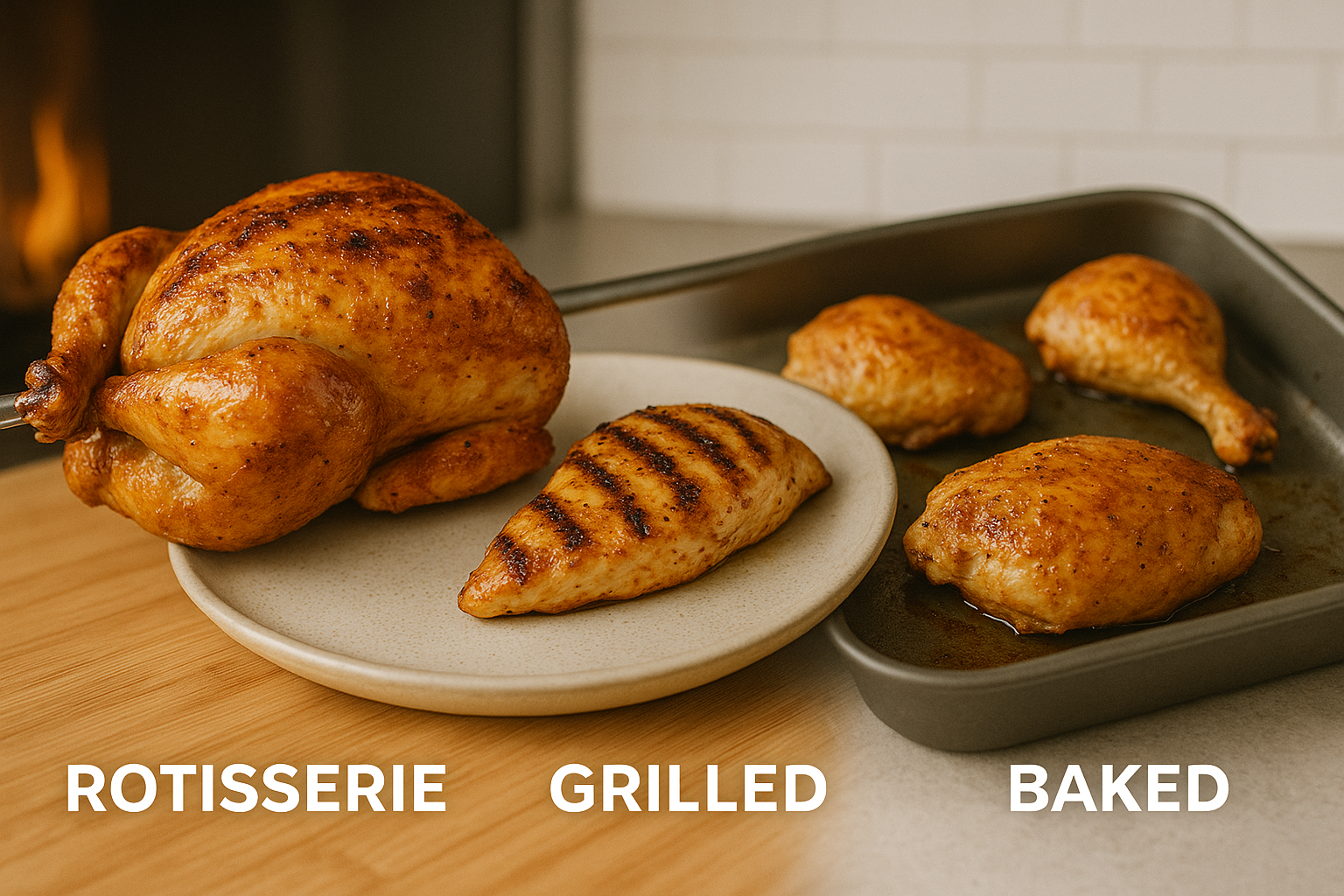
Rotisserie or Grilled or Baked – Which Wins
When it comes to grabbing a quick protein-packed meal, rotisserie chicken is a tempting choice. But how does it stack up nutritionally compared to grilled or baked chicken? Let’s break it down and look at the facts to answer the ultimate question is rotisserie chicken better than fried, grilled, or baked options?
Calories and Fat Content
Rotisserie chicken is known for its rich flavor, often coming from the small amount of oil or basting used during roasting. While it’s healthier than fried chicken, a typical rotisserie chicken may have slightly more calories and fat than grilled or baked chicken. This difference arises from the skin, where much of the fat is stored.
Sodium Levels
Here’s where rotisserie chicken might raise an eyebrow. Pre-cooked rotisserie chicken, especially from retailers, often contains added sodium in the form of brines or seasonings to enhance flavor and shelf life. This can quickly spike daily sodium intake compared to plain grilled or baked chicken made at home.
Detailed Nutrition Comparison
Take a closer look at how these popular chicken preparations differ by the numbers:
| Nutritional Value (per 3 oz) | Rotisserie Chicken | Grilled Chicken | Baked Chicken |
|---|---|---|---|
| Calories | 160 | 140 | 145 |
| Total Fat | 7g | 3g | 4g |
| Saturated Fat | 2g | 1g | 1.5g |
| Sodium | 400mg | 70mg | 80mg |
While you may save on prep time with rotisserie chicken, the trade-off is higher sodium and a bit more fat. Grilled or baked chicken offers lower sodium and fat counts, making it a better choice if you’re watching your dietary intake closely.
The Takeaway
If convenience is king for you, rotisserie chicken is a flavorful and affordable option. However, if you value full control over the seasoning and sodium levels, grilled or baked chicken might be the healthier long-term choice. Either way, it’s worth being mindful of the nutritional differences. After all, knowing what’s on your label empowers you to make smarter food decisions!
How to Make Rotisserie Chicken Work for Your Health Goals
If you love the convenience of rotisserie chicken but worry about what’s on the label, you’re not alone. These ready-to-eat staples are beloved for their affordability and time-saving appeal, but their nutritional profile can sometimes raise eyebrows. The good news? With a few smart choices, rotisserie chicken can fit into almost any health plan.
Why Rotisserie Chicken is a Smart Choice
- Convenience: Rotisserie chicken is one of the easiest ways to add lean protein to your meals without cooking from scratch.
- Affordability: For families and individuals on a budget, it’s often a cost-effective alternative to raw cuts.
- Versatility: From quick salads to hearty slow-cooker soups, it’s a blank canvas for countless recipes.
The Hidden Challenges
Despite these advantages, not all rotisserie chickens are created equal. Ingredients like preservatives, flavor enhancers, and sodium can sometimes sneak their way into the mix. Checking the nutrition facts label is critical watch out for high sodium levels or unfamiliar additives.
For example, some chickens may have up to 1,000 milligrams of sodium per serving, which can add up quickly, especially if you’re pairing it with salty sides. To stay informed, review trusted resources like healthline. A little label analysis goes a long way in aligning your choices with your health goals.